
You Should Go Back
You Should Go Back is an art project that foregrounds narratives of shared and lasting trauma caused by the spread of racial hatred in Britain. Co-founded by Kushag Patel and Prashant Kansara, it makes space for all to speak about the unseen impacts and legacies of racism and imperialism. Follow us HERE
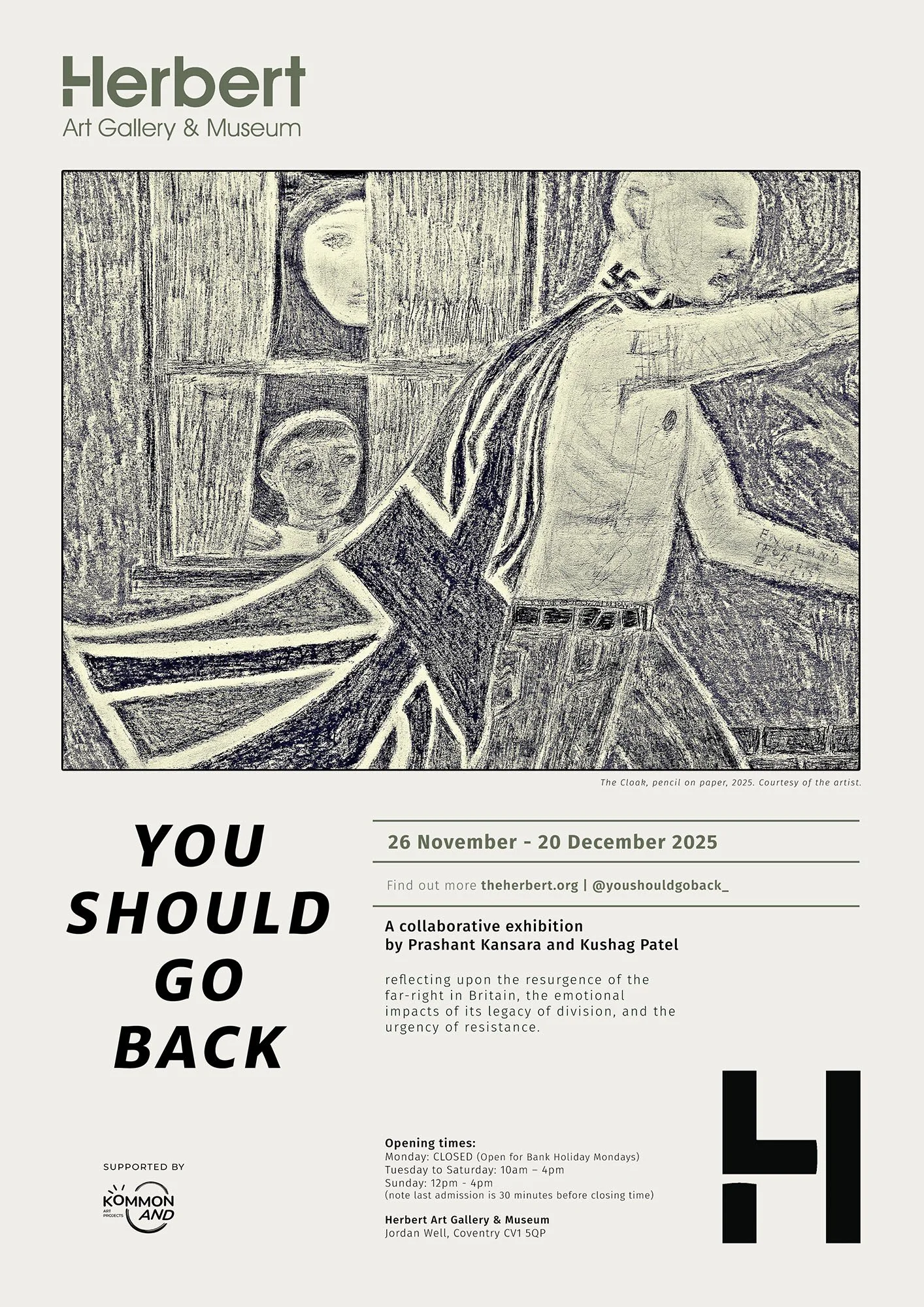
Exhibition Poster | 26 November - 20 December 2025
The project was initiated through a collaborative exhibition held at Herbert Art Gallery and Museum throughout December 2025.
Thank you so much for everyone who attended in person and those in spirit! It was amazing to see the overwhelmingly positive response to the exhibition. How it became a space of conversation and sharing, and we were so inspired that our artworks could generate all that. Hearing your stories and feedback made it all worthwhile and confirmed that this conversation really matters. These stories need to be told!
You can see a video of the exhibition HERE
If you would like to support the project please CLICK HERE or use the link below and to add your thoughts or memories to this conversation, or to comment about the exhibition, please use our feedback form. Alternatively, please leave a message via our Instagram account @youshouldgoback_ Your voices matter!
_________________________________________
Essay from the Exhibition at the Herbert Art Gallery and Museum
To disregard and downplay the resurgence of the far-right is to ignore the deep harm and division its ideology represents. It is to help make invisible the countless incidents of racial hatred and aggression experienced by marginalised individuals and communities across Britain, both now and in the past, to ignore our stories.
Collectively, through personal and shared recollections, the artworks here reveal these lesser known lived experiences.
These works give voice to the perspectives that are largely absent from archives, illuminating stories of fear, dread, resilience, and defiance in response to far-right intimidation and violence.
The deep and enduring scars caused by hate-filled rhetoric that remain etched in the minds of many, caused not only by overt racists but also by people who enabled the mainstreaming of prejudice and scapegoating in public discourse with their silence.
In Coventry in 1981, these injustices and racial tensions culminated in the murders of Dr. Amal Dharry and Satnam Singh Gill, sparking the city’s largest anti-racism protest, where people from all backgrounds stood together in solidarity. People took to the streets to confront the enduring legacies of empire, racial hierarchy, and erasure – stark reminders of the hostility, societal indifference, and generational trauma that characterised Britain in the 1970s and 1980s.
Such recollections feel increasingly vital as hate-driven and xenophobic rhetoric again gains in popularity and acceptance across political and social landscapes. These works reflect upon the legacy of the far-right in Britain and the urgent need for safeguarding and standing together in solidarity with all who are being persecuted today.